 MixKhazana
USA to Host 2031 Women's World Cup: What We Know
What happened: FIFA has confirmed that the United States will co-host the 2031 FIFA Women's World Cup with Mexico, Costa Rica and Jamaica. The decision was made on Monday, 23 November 2026, at a virtual Extraordinary FIFA Congress in Zurich, where the member associations appointed the four hosts by acclamation. The 2031 tournament will be the first Women's World Cup with 48 teams, and the first staged across four host nations. At the same meeting, FIFA confirmed that England, Northern Ireland, Scotland and Wales will host the 2035 Women's World Cup.
The Women's World Cup is coming back to the United States. FIFA confirmed on Monday, 23 November 2026, that the USA will lead a four-nation hosting of the 2031 tournament, together with Mexico, Costa Rica and Jamaica — and that the United Kingdom will follow in 2035. It is the biggest Women's World Cup ever planned: 48 teams, four host countries, and 20 stadiums across North America and the Caribbean.
The announcement ends a bidding process that has run for almost two years, and it was, in the end, a formality. Both the 2031 and 2035 bids were the only candidacies for their editions, and FIFA's 211 member associations approved them by acclamation — a unanimous voice vote at a virtual congress in Zurich, with no rival bid to beat. But the formality should not hide the scale of what was decided: the women's game is about to get its biggest stage yet, in the country where it has its deepest roots.
The Decision
FIFA's member associations met virtually at an Extraordinary Congress on Monday, 23 November 2026, and appointed the United States, Mexico, Costa Rica and Jamaica as the hosts of the FIFA Women's World Cup 2031, and England, Northern Ireland, Scotland and Wales as the hosts of the 2035 edition. Both appointments were made by acclamation, following bidding processes that began when the FIFA Council set the bid rules in March 2025.
The timing was symbolic. FIFA noted that the decision came almost exactly 35 years after the opening match of the inaugural Women's World Cup, a 12-team tournament played in China in 1991. In 35 years, the tournament has grown from 12 teams to 48, from one host country to four, and from a pioneering event into one of the biggest sporting competitions on the planet.
The two winning bids had a clear run for the past 20 months. The United States and Mexico first announced their joint intention to bid for 2031 in April 2024, after withdrawing their bid for the 2027 edition — which went to Brazil. FIFA declared the United States bid the sole valid bid for 2031 in April 2025, Mexico confirmed its involvement in May 2025, and Costa Rica and Jamaica joined in October 2025. The United Kingdom bid was declared the sole valid bid for 2035 in April 2025. Evaluation reports released on 11 November 2026, twelve days before the vote, found both bids had strong portfolios of existing stadiums, extensive infrastructure and strong commercial potential.
FIFA president Gianni Infantino welcomed the decisions, and the winning candidates promised commercially successful tournaments, with all profits reinvested in women's football. That promise matters: the growth of the women's game depends on the money the World Cup generates, and a tournament in the United States — the biggest sports market in the world — is expected to set new commercial records.
The 48-Team Format
The 2031 Women's World Cup will be the first edition to feature 48 teams. That is a major expansion: the tournament had 32 teams at the 2023 edition in Australia and New Zealand, 24 teams before that, and just 12 teams when it began in 1991. The expansion matches the men's World Cup, which also moved to 48 teams for its 2026 edition.
More teams means more matches, more countries represented, and more places where the women's game gets a global stage. For fans in countries that have never qualified before, 2031 could be their first World Cup. For the hosts, it means more fixtures to spread across the 20 stadiums in the bid. For FIFA, it means a bigger tournament to sell — and a bigger test of whether the women's game can fill the world's largest stadiums.
The four-host model is new as well. No Women's World Cup has ever been staged across four countries before, and no edition has had four host associations. The bid is a regional project across CONCACAF, the confederation for North America, Central America and the Caribbean: the United States and Mexico as the two big hosts, with Costa Rica and Jamaica each hosting matches as well. It is a model that spreads the tournament across a whole region rather than concentrating it in one country — and it means the 2031 World Cup will be played in four different nations, in three different languages, across thousands of miles.
The Host Cities
The bid offers FIFA a choice of stadiums in 20 cities: 14 in the United States, four in Mexico, plus San Jose in Costa Rica and Kingston in Jamaica. Most matches are likely to take place in the United States, which has the most stadiums in the bid, but the final list of host cities has not yet been decided — cities will have to wait to see whether FIFA picks them.
Among the American stadiums in the proposal are AT&T Stadium in Arlington, Texas, and Mercedes-Benz Stadium in Atlanta — two of the biggest and newest stadiums in the country, both of which also hosted matches at the men's World Cup in 2026. The full list of 14 American cities has not been published in full, but the bid's strength, according to FIFA's own evaluation report, is its portfolio of existing stadiums: these are venues that already exist, already host major events, and do not need to be built from scratch.
For Mexico, the bid includes four cities, giving the tournament a genuinely cross-border character. Costa Rica's matches would be played in its capital, San Jose, and Jamaica's in its capital, Kingston. For both countries, hosting World Cup matches would be a first: Mexico, Costa Rica and Jamaica have never hosted a Women's World Cup before, and the 2031 tournament will be the first time the women's game's biggest event has been played in Central America or the Caribbean.
The decision on which cities make the final cut will come later, and it will matter a great deal to the cities involved. Hosting World Cup matches brings visitors, television exposure and investment — and for the smaller hosts, it brings a place on the world stage that no amount of advertising could buy. Until FIFA announces the final list, every city in the bid is waiting.
The UK in 2035
Four years after the North American tournament, the Women's World Cup will come to the United Kingdom for the first time. The 2035 edition will be staged by England, Northern Ireland, Scotland and Wales, across 19 venues including Wembley Stadium in London. The UK bid proposed 22 stadiums in total, with 16 in England, three in Wales, two in Scotland and one in Northern Ireland.
For England, the 2035 tournament will be a homecoming of a different kind. England hosted the men's World Cup in 1966 — the year England won it — but it has never hosted the women's tournament. The English women's team, the Lionesses, won the European Championship at Wembley in 2022 in front of a record crowd, and the appetite for women's football in England has grown enormously since then. A home World Cup in 2035 would be the biggest women's sporting event the country has ever staged.
The UK bid also includes Northern Ireland, which has plans for a renovated Windsor Park in Belfast with a capacity of 23,000. Scotland and Wales would host matches too, making 2035 a genuinely four-nation tournament, like 2031. The two tournaments, taken together, mark a new era for the Women's World Cup: two consecutive editions staged across multiple countries, in the two biggest English-speaking sports markets in the world.
The USA's World Cup History
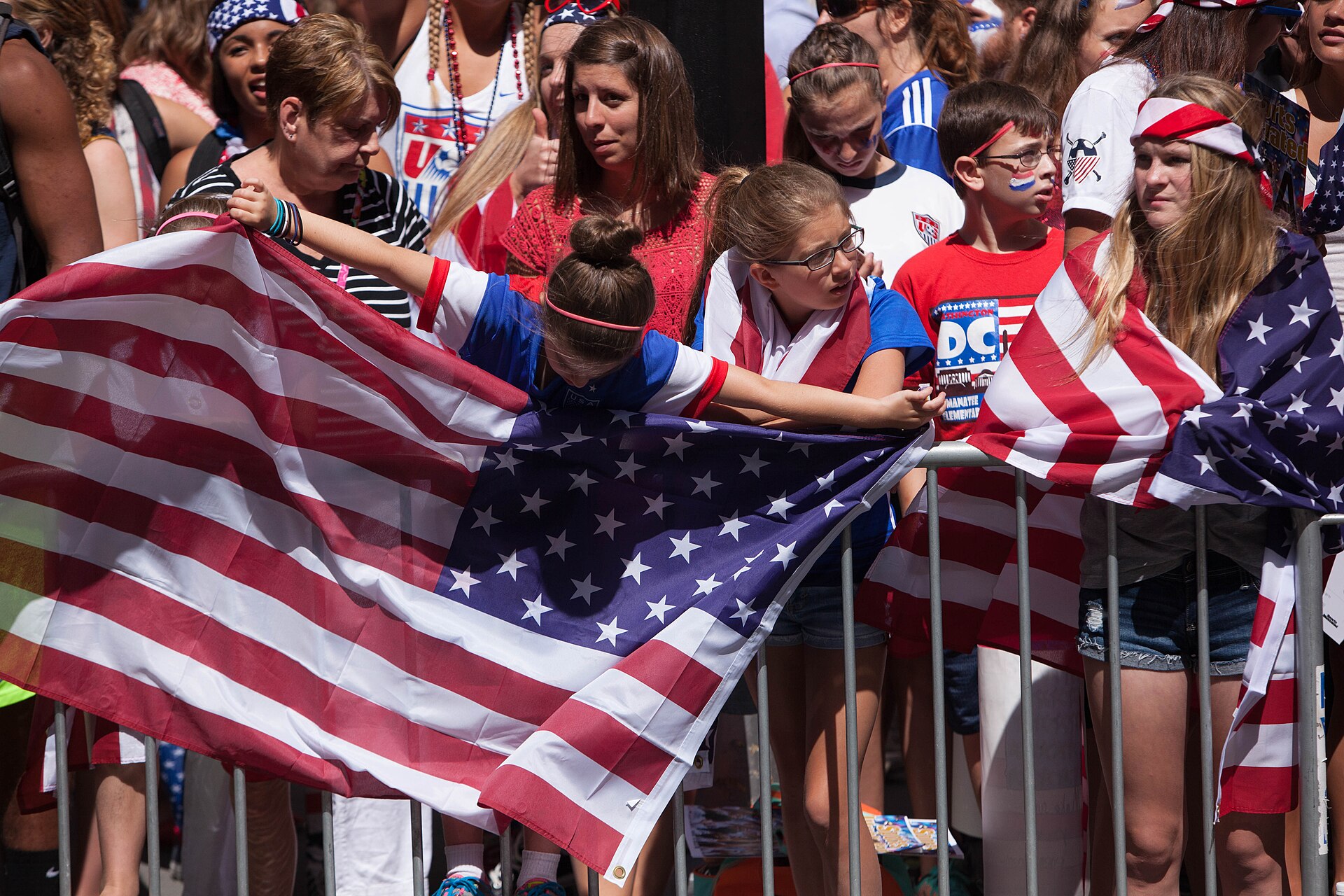
The United States is the natural home for a Women's World Cup. The American women's team is the most successful in the history of the tournament, with four titles — in 1991, 1999, 2015 and 2019 — more than any other country. The 1999 final, played at the Rose Bowl in California in front of more than 90,000 people, remains one of the most famous matches in the history of women's sport, and the ticker-tape parade that followed in New York City set the template for how America celebrates its women's champions.
The United States has hosted the tournament twice before, in 1999 and 2003, and both editions were landmarks for the women's game. The 1999 tournament, in particular, changed how women's football was seen in America: it filled stadiums, drew huge television audiences, and made household names of players like Mia Hamm and Brandi Chastain. The 2031 tournament will be played in a very different America — one where women's football is a professional, commercial sport with its own league, its own stars and its own huge audiences — and the expectation is that it will be the biggest Women's World Cup ever held.
There is also the simple matter of timing. The United States has just hosted the men's World Cup in 2026, and the stadiums, the transport, the hotels and the experience are all fresh. The 2031 women's tournament will benefit from all of it. And for American fans, the prospect of watching the US women's team defend their record on home soil — five years after the 2026 men's tournament, and eight years after the 2023 women's tournament in Australia and New Zealand — is the kind of sporting occasion that defines a generation.
What Happens Next
The next Women's World Cup comes first: Brazil 2027, running from 24 June to 25 July 2027. That tournament will be the first Women's World Cup held in South America, and it will set the stage for the expanded 48-team format that follows in 2031. Between now and then, FIFA will work with the four 2031 hosts to finalise the list of stadiums and cities, and to plan a tournament that spans four countries and thousands of miles.
For fans, the practical message is patience. Ticket sales for 2031 have not been announced, and with the tournament more than four years away and the host cities not yet finalised, tickets are not expected to go on sale for several years. When they do, the only safe place to buy them will be through FIFA's official channels — and any offer of 2031 tickets today should be treated with suspicion.
What is certain is the direction of travel. The Women's World Cup has grown from 12 teams in 1991 to 48 teams in 2031, from one host to four, and from a pioneering event into a tournament that fills the biggest stadiums in the world. The decisions taken in Zurich on 23 November 2026 — the USA, Mexico, Costa Rica and Jamaica in 2031, and the United Kingdom in 2035 — set the course for the next decade of the women's game. The next step is Brazil 2027. After that, the World Cup comes home to America.
Frequently Asked Questions
Who will host the 2031 Women's World Cup?
The United States, Mexico, Costa Rica and Jamaica will co-host the 2031 FIFA Women's World Cup. FIFA confirmed the four hosts at an Extraordinary Congress on 23 November 2026.
How many teams will play at the 2031 Women's World Cup?
The 2031 edition will be the first Women's World Cup to feature 48 teams, up from 32 teams at the 2023 tournament in Australia and New Zealand.
Which cities will host 2031 Women's World Cup matches?
The bid offers FIFA a choice of stadiums in 20 cities: 14 in the United States, four in Mexico, plus San Jose in Costa Rica and Kingston in Jamaica. The final list of host cities has not yet been decided.
Who will host the 2035 Women's World Cup?
England, Northern Ireland, Scotland and Wales will host the 2035 FIFA Women's World Cup, across 19 venues including Wembley Stadium in London. It will be the first time the tournament comes to the United Kingdom.
When is the next Women's World Cup?
The next Women's World Cup takes place in Brazil in 2027, running from 24 June to 25 July 2027, before the 2031 edition in North America and the Caribbean.
Has the USA hosted the Women's World Cup before?
Yes. The United States hosted the Women's World Cup in 1999 and 2003, and the US women's team has won the tournament four times — in 1991, 1999, 2015 and 2019 — more than any other country.
When will tickets for the 2031 Women's World Cup go on sale?
Ticket sales have not been announced. With the tournament more than four years away and host cities not yet finalised, tickets are not expected to go on sale for several years. Only buy from FIFA's official channels once sales open.
How were the 2031 and 2035 hosts chosen?
Both bids were the sole candidacies for their editions and were appointed by acclamation at a virtual Extraordinary FIFA Congress in Zurich on 23 November 2026, after bidding processes that began in March 2025.
Related Reading
- Alcaraz Wins ATP Finals 2026 in Turin — the other big championship story of the month, from the men's tennis season finale in Italy.
- Super Bowl 2027 Los Angeles Travel Guide — the next huge American sporting event, coming to Los Angeles in February 2027.
Sources
- FIFA — 2031 and 2035 FIFA Women's World Cup hosts appointed — the official announcement from the Extraordinary FIFA Congress, 23 November 2026.
- theScore / AP — U.S. to co-host 2031 Women's World Cup, UK wins 2035 bid — the 20-city stadium list, the acclamation vote, and the UK bid details.
- Wikipedia — 2031 and 2035 FIFA Women's World Cup bids — the bidding timeline, the evaluation reports of 11 November 2026, and the congress vote.
- Flashscore — FIFA confirm USA to co-host 2031 Women's World Cup, UK hosting 2035 — the 48-team expansion and the Brazil 2027 dates.
This article was published on 24 November 2026 and covers FIFA's announcement of 23 November 2026. Host cities are not yet finalised and ticket sales have not been announced — check FIFA's official channels for updates.