 MixKhazana
Supreme Court to Decide Fate of AR-15 Bans
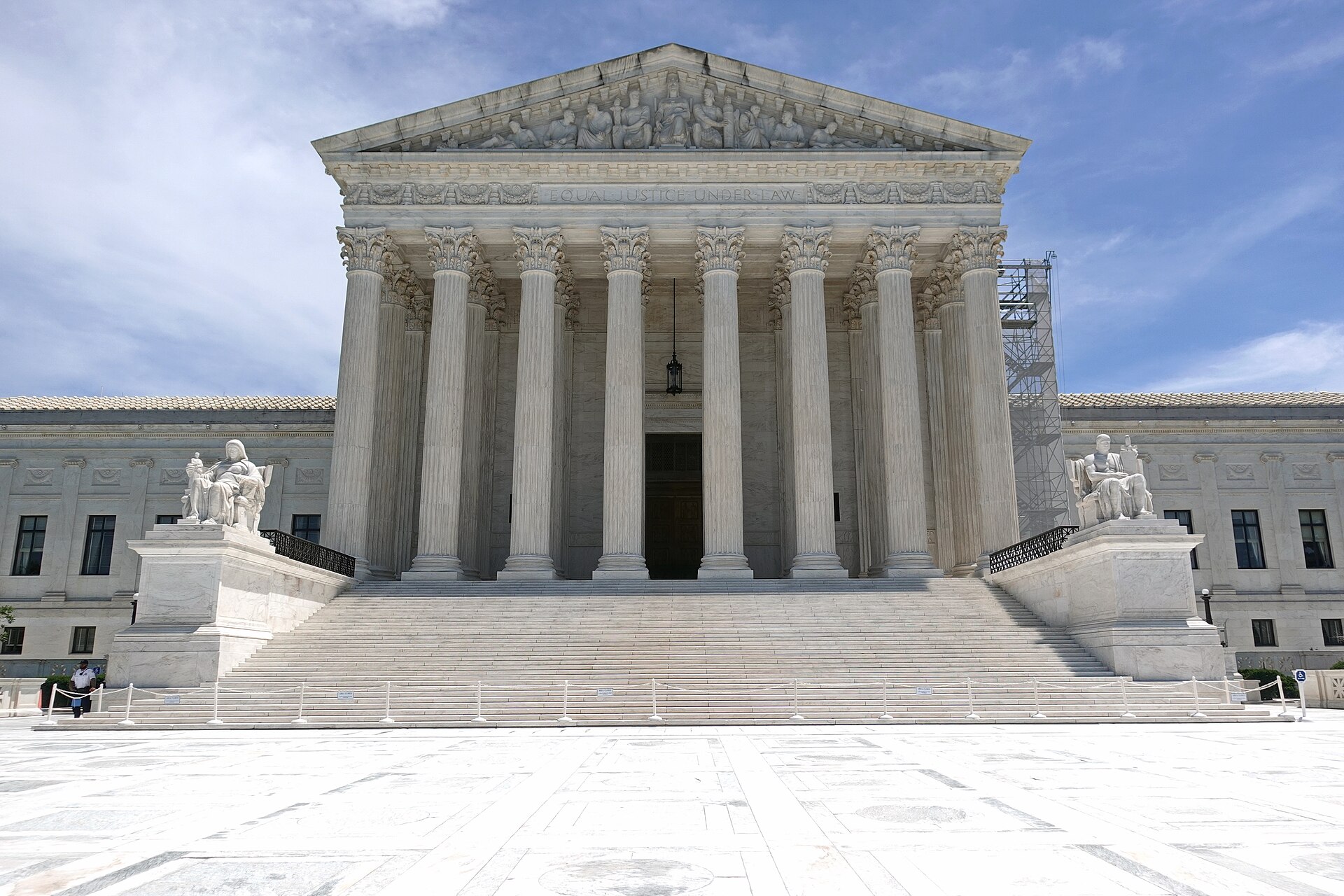
What happened: The US Supreme Court will hear oral arguments on Wednesday 2 December 2026 in two consolidated cases asking whether state and local bans on AR-15-style rifles and similar semiautomatic weapons violate the Second Amendment. The cases challenge a 1993 ban in Cook County, Illinois (which includes Chicago) and Connecticut's ban, passed after the 2012 Sandy Hook Elementary School shooting in Newtown. A decision is expected by the end of the Court's term in June 2027. Eleven states and the District of Columbia ban so-called assault weapons.
The United States Supreme Court will hear arguments on Wednesday 2 December 2026 on one of the most consequential gun questions it has faced in years: whether state and local bans on AR-15-style rifles and similar semiautomatic weapons violate the Second Amendment. The two cases, heard together, challenge a ban in Cook County, Illinois, that dates back to 1993, and Connecticut's ban, passed after the 2012 Sandy Hook Elementary School shooting in Newtown.
A decision is expected by the end of the Court's term in June 2027. Eleven states and the District of Columbia ban so-called assault weapons, so the ruling will affect the law in a large part of the country — whichever way it goes. Neither ban has been overturned in the meantime, and both remain in force while the cases are pending.
This article explains the two cases, how they got to the Supreme Court, the exact question the Court agreed to decide, the legal background the justices will apply, and the arguments on both sides — presented as each side makes them, without taking a position on the outcome.
The Two Cases
The first case is Khaya v. Cook County (No. 25-238). It challenges the ban on assault weapons in Cook County, Illinois, the county that includes Chicago, which has been in place since 1993. The case was originally called Viramontes v. Cook County, after its lead plaintiff, Cutberto Viramontes. On 29 October, Viramontes asked to be dropped from the case; the Court agreed on 23 November, and the case is now named for a different challenger, Christopher Khaya.
The second case is Grant v. Higgins (No. 25-566), which challenges Connecticut's ban on assault weapons. Connecticut passed its ban after the 2012 shooting at Sandy Hook Elementary School in Newtown, in which 20 children and six adults were killed. The ban is one of the strictest in the country, and it has been defended by the state ever since.
The Court agreed on 30 June 2026 to hear both cases together, with one hour of argument combined for the two. Hearing them together makes sense: both ask the same constitutional question, and a single ruling will answer it for both. The arguments are scheduled for Wednesday 2 December 2026.
There is one complication. After Viramontes withdrew, Cook County asked the Court to dismiss its case as moot — arguing, in effect, that with the original plaintiff gone, there was no longer a live dispute to decide. On 24 November, the Court said it would consider the dismissal request at the 2 December arguments. Even if the Cook County case were dismissed, the Connecticut case ensures the core question stays before the Court.
How the Cases Got Here
Both bans survived challenges in the lower courts before reaching the Supreme Court. In the Cook County case, the 7th US Circuit Court of Appeals ruled against the challengers on 2 June 2025, upholding the ban. In the Connecticut case, the 2nd US Circuit Court of Appeals upheld the state's bans in August 2025. The challengers then asked the Supreme Court to take both cases, and on 30 June 2026 the Court agreed.
The path to the Supreme Court was long. The Cook County ban has been challenged before — it dates to 1993, making it one of the oldest assault-weapons bans in the country — and it has survived earlier rounds of litigation. Connecticut's ban, passed in the aftermath of Sandy Hook, has also been litigated before. What changed is the Supreme Court itself: its 2022 decision in the Bruen case, explained below, gave challengers a new legal framework to argue under.
The two cases also arrive at a moment when the question is live in many states at once. Eleven states and the District of Columbia ban so-called assault weapons: California, Connecticut, Delaware, Illinois, Maryland, Massachusetts, New Jersey, New York, Rhode Island, Virginia and Washington state. A ruling in these cases will therefore be felt far beyond Cook County and Connecticut.
The Court's decision to hear the cases does not tell us how it will rule. The Court takes cases to resolve disagreements in the lower courts and to settle important constitutional questions — and it takes them whether it expects to uphold the law or strike it down. What it does tell us is that a majority of the justices thought the question was important enough to answer.
The Question Before the Court
The question the Court agreed to decide is whether the Second and Fourteenth Amendments guarantee the right to possess AR-15 platform and similar semiautomatic rifles. The Second Amendment protects the right to keep and bear arms; the Fourteenth Amendment is the provision that applies that right against the states, including Illinois and Connecticut.
The AR-15 is the rifle at the centre of the dispute. It is a semiautomatic rifle — one shot per pull of the trigger, with the next round loaded automatically — and it is one of the most widely owned rifles in the United States. The challengers say it is an ordinary rifle in common use. The states that ban it say it is a weapon of war that has no place in civilian hands. The Court will have to decide which description the Constitution supports.
The phrase that will matter most in the arguments is "common use". The Justice Department, in an amicus brief filed in September 2026, argued that the bans are unconstitutional because rifles like the AR-15 are in common use for lawful purposes. If the Court accepts that argument, the bans are in trouble. If it accepts the states' argument that these weapons can be banned despite their popularity, the bans will stand.
The Court will hear one hour of argument on 2 December, covering both cases. After the arguments, the justices will meet in private to discuss the cases, assign the opinion, and draft a ruling. That process takes months, which is why a decision is not expected until the end of the Court's term in June 2027.
The Legal Background
The starting point for modern gun law is District of Columbia v. Heller, decided in 2008. In Heller, the Supreme Court recognised for the first time that the Second Amendment protects an individual right to bear arms for self-defence, separate from service in a militia. The case struck down a handgun ban in Washington, D.C., and it established that the right to keep a gun at home for self-defence is constitutionally protected.
The second landmark is New York State Rifle & Pistol Association v. Bruen, decided in 2022 by a 6-3 vote. Bruen struck down New York's limit on carrying a gun in public, and it set a new test for gun laws: the government must show that a restriction is consistent with the nation's history and tradition of gun regulation. If the government cannot point to a historical analogue for the law, the law fails.
Bruen is the framework the challengers are relying on. Their argument, in essence, is that there is no historical tradition of banning an entire class of commonly owned rifles, and that under Bruen the bans therefore cannot stand. The states' response is that there is a long tradition of regulating dangerous weapons, and that bans on military-style rifles fit within it.
The Justice Department's September 2026 amicus brief adds weight to the challengers' side. An amicus brief — a "friend of the court" filing — is a submission by someone who is not a party to the case, and the Justice Department's view carries particular weight because it is the federal government's own legal position. The department argued that the bans are unconstitutional because the rifles are in common use for lawful purposes.
The Arguments on Both Sides
Supporters of the bans — including Democratic state officials and families of Sandy Hook victims — argue that AR-15-style rifles are the weapons used in many mass shootings, and that states must be able to restrict them to protect public safety. Their case is built on the record of mass shootings in which these rifles were used, and on the argument that a state has the right to decide that a particular kind of weapon is too dangerous for civilian ownership.
The challengers argue the opposite: that the AR-15 is an ordinary, widely owned rifle, used lawfully by millions of Americans for self-defence, hunting and target shooting. On their view, the rifle's popularity is itself the point — a weapon in common use cannot be banned under the Second Amendment, because the amendment protects the weapons Americans actually own and use.
Both sides agree on the basic facts about the rifle — that it is semiautomatic, that it is widely owned, and that it has been used in mass shootings. They disagree about what those facts mean under the Constitution. That disagreement is what the Court will resolve, and it is a genuine legal dispute, not a question with an obvious answer.
This article does not predict the outcome. The Court has not yet heard the arguments, and its ruling will depend on how the justices apply the Bruen test to these particular bans. What is certain is that the decision, when it comes in June 2027, will be one of the most important gun rulings in years — and that it will shape gun law in the eleven states and the District of Columbia that currently ban these weapons.
Frequently Asked Questions
When will the Supreme Court hear the AR-15 cases?
Oral arguments are scheduled for Wednesday 2 December 2026, with one hour of argument combined for both cases. A decision is expected by the end of the Court's term in June 2027.
Which cases are before the Court?
Khaya v. Cook County (No. 25-238), challenging the 1993 assault-weapons ban in Cook County, Illinois, and Grant v. Higgins (No. 25-566), challenging Connecticut's ban, passed after the 2012 Sandy Hook school shooting. The Court agreed on 30 June 2026 to hear both together.
What is the Court being asked to decide?
Whether the Second and Fourteenth Amendments guarantee the right to possess AR-15 platform and similar semiautomatic rifles. The Court will decide whether state and local bans on these rifles are constitutional.
How many states ban assault weapons?
Eleven states and the District of Columbia: California, Connecticut, Delaware, Illinois, Maryland, Massachusetts, New Jersey, New York, Rhode Island, Virginia and Washington state.
What did the lower courts decide?
Both bans were upheld. The 7th US Circuit Court of Appeals ruled against the challengers in the Cook County case on 2 June 2025, and the 2nd Circuit upheld Connecticut's bans in August 2025.
What is the Bruen test?
From New York State Rifle & Pistol Association v. Bruen (2022, 6-3): the government must show that a gun restriction is consistent with the nation's history and tradition of gun regulation. The earlier landmark, District of Columbia v. Heller (2008), recognised an individual right to bear arms for self-defence.
What does the Justice Department say?
In an amicus brief filed in September 2026, the Justice Department argued the bans are unconstitutional because AR-15-style rifles are in "common use" for lawful purposes.
Why is the Cook County case called Khaya now?
It was originally Viramontes v. Cook County, after lead plaintiff Cutberto Viramontes. He asked to be dropped on 29 October, the Court agreed on 23 November, and the case is now named for challenger Christopher Khaya. Cook County has asked the Court to dismiss the case as moot; the Court will consider that request at the 2 December arguments.
Are the bans still in force while the cases are pending?
Yes. Neither ban has been overturned, and both remain in force while the Supreme Court considers the cases.
Related Reading
- Supreme Court to Rule on Trump Asylum Ban at Border — the Supreme Court and the Trump asylum ban at the southern border.
- Democrats' 2026 Midterm Win: Mamdani's Story — how Mamdani and the Democrats won the 2026 elections.
- Senate Passes Permitting Reform Bill in 62–33 Vote — the Senate passed permitting reform in 2026.
Sources
- AP via Issaquah Reporter — US Supreme Court to weigh bans on AR-15s, similar guns
- Men's Journal — Supreme Court takes up AR-15 ban fight that could affect millions
- The Florida Press — Supreme Court hears AR-15 ban challenge Wednesday
Published 29 November 2026; oral arguments are scheduled for 2 December 2026 and a decision is expected by June 2027 — this article will need updating after the arguments and again when the Court rules.