 MixKhazana
SS United States Sunk as World's Largest Artificial Reef
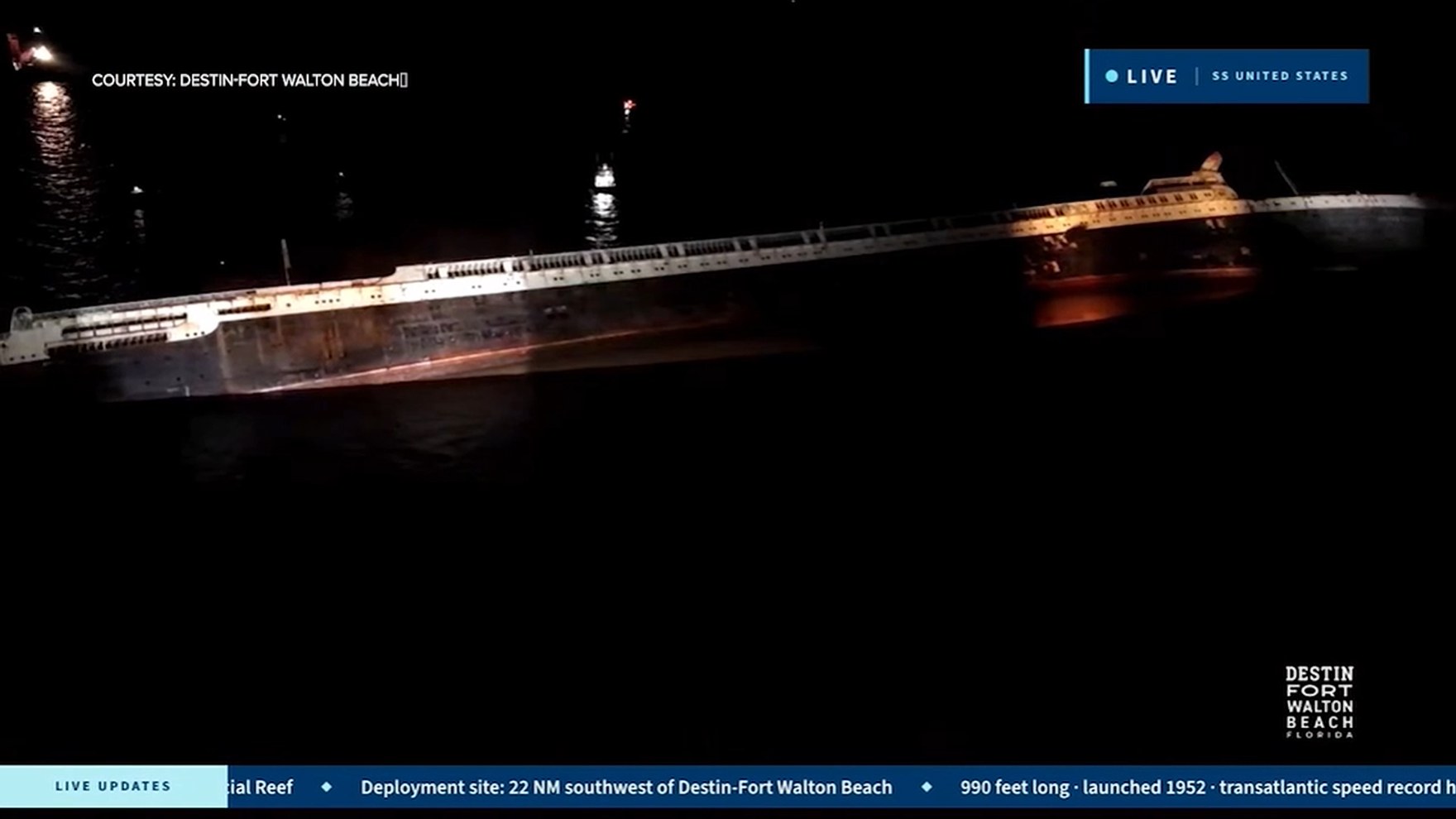
Update (20 November 2026): On Wednesday 11 November 2026, the SS United States — the fastest ocean liner ever built — was deliberately sunk off the Florida coast to become what officials call the world's largest artificial reef. She now rests upright on the seabed about 22 nautical miles south-west of Destin–Fort Walton Beach.
On the evening of Wednesday 11 November 2026 — Veterans Day — one of the most famous ships in American history disappeared beneath the waves of the Gulf of Mexico. The SS United States, the fastest ocean liner ever built and still the holder of the transatlantic speed record, was deliberately sunk about 22 nautical miles (roughly 25 miles) south-west of Destin–Fort Walton Beach, Florida, to become what officials call the world's largest artificial reef.
It was the end of a journey that had lasted more than seven decades: from record-breaking liner in the 1950s, to decades at a Philadelphia pier, to a tow down the coast and a long clean-up in Alabama — and finally, to a new life on the seabed. This is the full story of how she got there, how the sinking unfolded, and what happens next.
What Happened
The sinking had originally been scheduled for Thursday 12 November, but it was moved up a day because of forecast high winds. As it turned out, the new date carried its own meaning: 11 November is Veterans Day in the United States.
The ship was scuttled at a site in the Gulf of Mexico whose published coordinates are 30° 07.148′ N, 86° 46.755′ W. She settled upright on her keel, within a few feet of her intended location — exactly where the project team wanted her. She now sits on the seabed in about 180 feet (55 m) of water, with her top deck about 55–60 feet (18 m) below the surface.
Those numbers decide who can visit her: at 55–60 feet down, the upper decks are within reach of less experienced divers, while the deeper decks, towards 180 feet, are technical-diving territory.
The wreck joins more than 500 artificial reefs already in the Destin–Fort Walton Beach area. It sits within a day trip of the previous record-holder, the 911-foot aircraft carrier USS Oriskany, sunk off Pensacola in 2006. At 990 feet, the SS United States now takes that title.
How She Went Down
Sinking a ship of this size on purpose is a slow, deliberate operation, and this one did not go quite as planned — it took far longer than anyone expected. Federal environmental rules prohibited the use of explosives, so the crew had to sink her the old-fashioned way: by letting the sea in.
Contractors prepared the ship by removing more than 400 portholes, cutting 10-by-10-foot openings in the decks, and opening the seawater intake valves. The idea was that water would flood in through the openings and the ship would go down in a controlled way. Crews had estimated the flooding would take about 45 minutes. In the end, it took about eight hours.
The ship finally went under at about 9–10 p.m. Eastern time on 11 November. Before the sinking, her two giant 65-foot red funnels — the most recognisable feature of her silhouette — had been removed, so what went down was the hull itself, stripped of the funnels that had defined her profile for more than 70 years.
Despite the delay, the operation ended where it was supposed to: the ship settled upright on her keel, close to her planned position. The eight-hour flooding time, rather than the expected 45 minutes, is a reminder of how strongly a ship like this is built.
A Ship With a Record
To understand why the sinking of this ship made headlines around the world, you have to understand what the SS United States was. At 990 feet (302 m) long, she is 108 feet longer than the Titanic — and unlike the Titanic, she still holds her record. She won the Blue Riband, the prize for the fastest transatlantic crossing by a passenger liner, on her maiden voyage in 1952, and no passenger ship has ever taken it from her.
She was built in Newport News, Virginia, in 1950–51, designed by the naval architect William Francis Gibbs and built by more than 3,000 workers.
She served as a passenger liner from 1952 to 1969, and her record has never been beaten. After her working life ended, she spent decades at a pier in Philadelphia.
From Philadelphia to Florida
The road to the reef began in October 2024, when Okaloosa County bought the ship from the non-profit SS United States Conservancy for about $1 million. The whole project cost about $13.5 million, covering the purchase, the towing, the environmental remediation — the long job of stripping and cleaning the ship so she could be sunk safely — and funding towards a land-based museum.
On 19 February 2025, the ship was towed out of Philadelphia, beginning the last voyage of her life. She spent about 20 months in Mobile, Alabama, where crews stripped her interior, removed hazardous materials and prepared her for sinking. It was during this period that her two 65-foot red funnels were taken off, along with more than 400 portholes and much of her remaining fittings.
The county says it removed 99 percent of materials containing PCBs during that clean-up, a figure that became a point of dispute, as we explain below.
From Mobile, she was towed to the sinking site off Destin–Fort Walton Beach, with the final timing set by the weather — which is why the sinking was moved forward a day when high winds were forecast for 12 November.
What Divers Will Find
The county's purpose is straightforward: a dive and fishing attraction, and new marine habitat. A ship of this size offers decks and vast open spaces that fish can colonise and divers can explore.
Officials expect the wreck to become habitat for species including tuna, marlin and swordfish. At 990 feet, she is far larger than any other artificial reef in the area, and her hull offers far more surface for marine life to grow on than any smaller wreck.
The upper decks, at 55–60 feet, are within comfortable reach of recreational divers, while the deeper parts of the ship offer a serious technical dive. Because she settled upright on her keel, the wreck keeps the shape of a ship, which makes her easier to navigate and to map.
There is one important warning for anyone planning a trip. No official opening date for public dives has been confirmed yet. The county needs to confirm that the wreck has settled safely before divers are allowed down, and until that confirmation comes, readers should not book anything. Dive operators in the area will announce openings once the county gives the go-ahead.
A Living Laboratory
The wreck is not only a tourist attraction. Scientists from the Woods Hole Oceanographic Institution — one of the world's best-known ocean research organisations — will study how marine life colonises the wreck, taking water samples at about 132 locations over several years.
That research matters because a ship this size, sunk in one piece at a known location, is a rare opportunity: scientists can watch, almost from day one, how a bare steel hull becomes a living reef.
The 132 sampling locations, revisited over several years, will give researchers a detailed picture of that process — far more detailed than the snapshots that smaller or older wrecks usually allow. For the county, the science is part of the point: the wreck is meant to be studied, not just dived, and the findings will help shape how future artificial reefs are designed and placed.
In a sense, it is a second career for the ship: her working life was spent carrying people across the Atlantic, and her new life will be spent carrying an ecosystem. Few research sites in the ocean come with a 990-foot structure delivered in one piece.
The Environmental Question
Not everyone welcomed the sinking. The environmental case for it — that a cleaned ship becomes habitat — depends on how thoroughly the ship was cleaned first, and that question was disputed right up to the day she went down.
The county says it removed 99 percent of materials containing PCBs, a group of industrial chemicals that can persist in the environment and build up in marine life. Outside magazine has noted that there was no independent verification of that figure — the county's claim has not been checked by an outside body, and that gap was the heart of the criticism.
The dispute reached the courts. The SS United States Preservation Foundation sued the Army Corps of Engineers on 3 November 2026, arguing that the assessment of toxic coatings on the ship was inadequate. The foundation asked a judge for an emergency order to halt the sinking. On 6 November, a judge denied that emergency motion, and the sinking went ahead as planned five days later.
The argument is not over, even now that the ship is on the seabed. The Woods Hole research programme will be watching the water around the wreck, and its findings over the next few years will be the best evidence of whether the clean-up was good enough.
What Happens Next
- Settling and survey: the county will confirm that the wreck has settled safely on the seabed before any public diving is allowed. Do not book a dive trip until that confirmation is announced.
- Marine life arrives: colonisation begins immediately — first the small organisms that attach to steel, then the fish that follow them. Scientists will track the process at about 132 sampling locations over several years.
- A land-based museum: a museum telling the story of the SS United States is planned in the Destin–Fort Walton Beach area, funded in part from the $13.5 million project budget. No museum site or opening date has been announced.
- Dive tourism: once the wreck is declared open, dive operators in Destin–Fort Walton Beach are expected to run trips to the upper decks for recreational divers and to the deeper decks for technical divers.
- The record stands: at 990 feet, the SS United States is now the world's largest artificial reef, taking the title from the 911-foot USS Oriskany off Pensacola — and the two wrecks, a day trip apart, give Florida's Gulf coast the two largest artificial reefs in the world.
The SS United States was built to be the fastest ship on the Atlantic, and she never lost that title. She spent half a century waiting for a future, and then, in a single November evening, she found one — not on the surface, but on the seabed, as a reef, a dive site and a laboratory. Her record still stands, and divers will be visiting her for generations.
Frequently Asked Questions
When was the SS United States sunk?
The SS United States was deliberately sunk on Wednesday 11 November 2026 — Veterans Day — in the Gulf of Mexico about 22 nautical miles south-west of Destin–Fort Walton Beach, Florida. The sinking had been scheduled for Thursday 12 November but was moved up a day because of forecast high winds.
Where exactly is the wreck of the SS United States?
The wreck lies at published coordinates 30° 07.148′ N, 86° 46.755′ W, in about 180 feet (55 m) of water. It settled upright on its keel, within a few feet of its intended location.
How deep is the wreck — can recreational divers visit it?
The ship sits in about 180 feet of water, with its top deck about 55–60 feet (18 m) below the surface. That puts the upper decks within reach of less experienced divers, while the deeper decks are technical-diving territory. No official opening date for public dives has been confirmed yet, so do not book anything until the county confirms the wreck has settled.
Why was the SS United States sunk?
Okaloosa County bought the ship to create the world's largest artificial reef — a dive and fishing attraction and a research site. The county expects the wreck to become habitat for species including tuna, marlin and swordfish, and scientists from the Woods Hole Oceanographic Institution will study how marine life colonises it.
How big is the SS United States?
The ship is 990 feet (302 m) long — 108 feet longer than the Titanic — and she still holds the transatlantic speed record, the Blue Riband. She was built in Newport News, Virginia, in 1950–51 and served as a passenger liner from 1952 to 1969.
How was the ship sunk without explosives?
Federal environmental rules prohibited explosives. Contractors removed more than 400 portholes, cut 10-by-10-foot openings in the decks and opened seawater intake valves. Flooding took about eight hours — crews had estimated 45 minutes — and the ship went under at about 9–10 p.m. ET on 11 November 2026.
Is the wreck safe — what about toxic materials?
The county says it removed 99 percent of materials containing PCBs, although Outside magazine has noted there was no independent verification of that figure. The SS United States Preservation Foundation sued the Army Corps of Engineers on 3 November 2026 over an inadequate assessment of toxic coatings; a judge denied the emergency motion to halt the sinking on 6 November.
When can I dive the wreck, and is there a museum?
No official opening date for public dives has been confirmed yet — do not book anything until the county confirms the wreck has settled. A land-based SS United States museum in the Destin–Fort Walton Beach area is planned, but no museum site or opening date has been announced.
Related Reading
- Voyager 1 Reaches One Light-Day From Earth — another record-breaking American craft, still travelling after nearly half a century.
- South Florida Floods: Up to 15 Inches of Rain — more November news from Florida, as record rain hit the state's south-east coast.
Sources
- Dezeen — SS United States ocean liner sunk off Florida to become world's largest artificial reef — reports the 11 November 2026 sinking off Destin–Fort Walton Beach, the ship's 990-foot length and her Blue Riband record.
- New York Almanack — SS United States sunk off Florida — covers the sinking, the ship's history from her 1952 maiden voyage to her decades in Philadelphia, and the reef project.
- Green Prophet — Sunken ship is the world's biggest underwater lab — reports the Woods Hole Oceanographic Institution research programme and the plan to study marine colonisation of the wreck.
- Old Sea Dogs — SS United States sunk as world's largest artificial reef, Destin — covers the sinking operation, the wreck's position and depth, and the diving plans for the site.
- Shortly Online — SS United States reef guide — a guide to the reef project, including the purchase, the clean-up in Mobile and the expected marine habitat.
This article was published on 20 November 2026. No official opening date for public dives has been confirmed — do not book a dive trip until Okaloosa County confirms the wreck has settled.