 MixKhazana
AI Proves Riemann Hypothesis, Mathematicians Confirm
Update (21 November 2026): Independent mathematicians have confirmed the claim — the Lean Focused Research Organization and the Mathlib Initiative said they have “full confidence” the proof is correct, and MIT’s Andrew Sutherland independently compiled all 175,187 Lean modules. The proof is machine-checked, not yet peer-reviewed.
On 20 November 2026, a mathematician at Anthropic announced that he believed he had found a proof of the most famous unsolved problem in mathematics — with the help of an artificial intelligence. Levent Alpöge, a mathematician at Anthropic and a junior fellow at the Harvard Society of Fellows, said he had, working with Claude, discovered a proof of the Riemann Hypothesis, a question about prime numbers unsolved since 1859.
Within a day, independent mathematicians said the claim checks out. On Saturday 21 November 2026, the Lean Focused Research Organization and the Mathlib Initiative said they had “full confidence” the proof is correct, and MIT’s Andrew Sutherland independently compiled the entire proof. If the claim holds, it is, in the words of Fields Medal winner James Maynard of Oxford, “clearly a historic milestone in mathematics.” There are still reasons to be careful: the proof has been checked by a machine, not yet by traditional peer review, and the short summary has been criticised as unclear. This article sets out what happened, what the problem is, how the proof was built and checked, what the sceptics say, and what still has to happen before anyone can call it solved.
What Happened
On Friday 20 November 2026, Levent Alpöge published a short document carrying a remarkable claim. “I believe I have, working with Claude, discovered a proof of the Riemann Hypothesis,” he wrote. The claim also covered the Generalized Riemann Hypothesis for all Dirichlet L-functions — the broader version of the same problem.
Alpöge released the claim in two parts: a 4-page note titled “Remark”, and a 14-part archive of 175,187 files in Lean 4, a computer language in which proofs can be checked step by step by a machine. The archive is 239.3 MB compressed and expands to more than 61.5 GB — a measure of how long and detailed the argument is.
The announcement came one day after Anthropic’s stock market debut on 19 November, with shares priced at $83; Nature reported the listing initially valued the company at about US$1.5 trillion. Alpöge addressed the timing directly: “There is an obvious cynical view, to do with the timing, but it is false.” Anthropic did not immediately respond to Nature’s request for comment. The final pieces had aligned late on Sunday night, 15 November 2026, and before publishing Alpöge consulted Anthropic chief executive Dario Amodei and close mathematical colleagues.
What Is the Riemann Hypothesis?
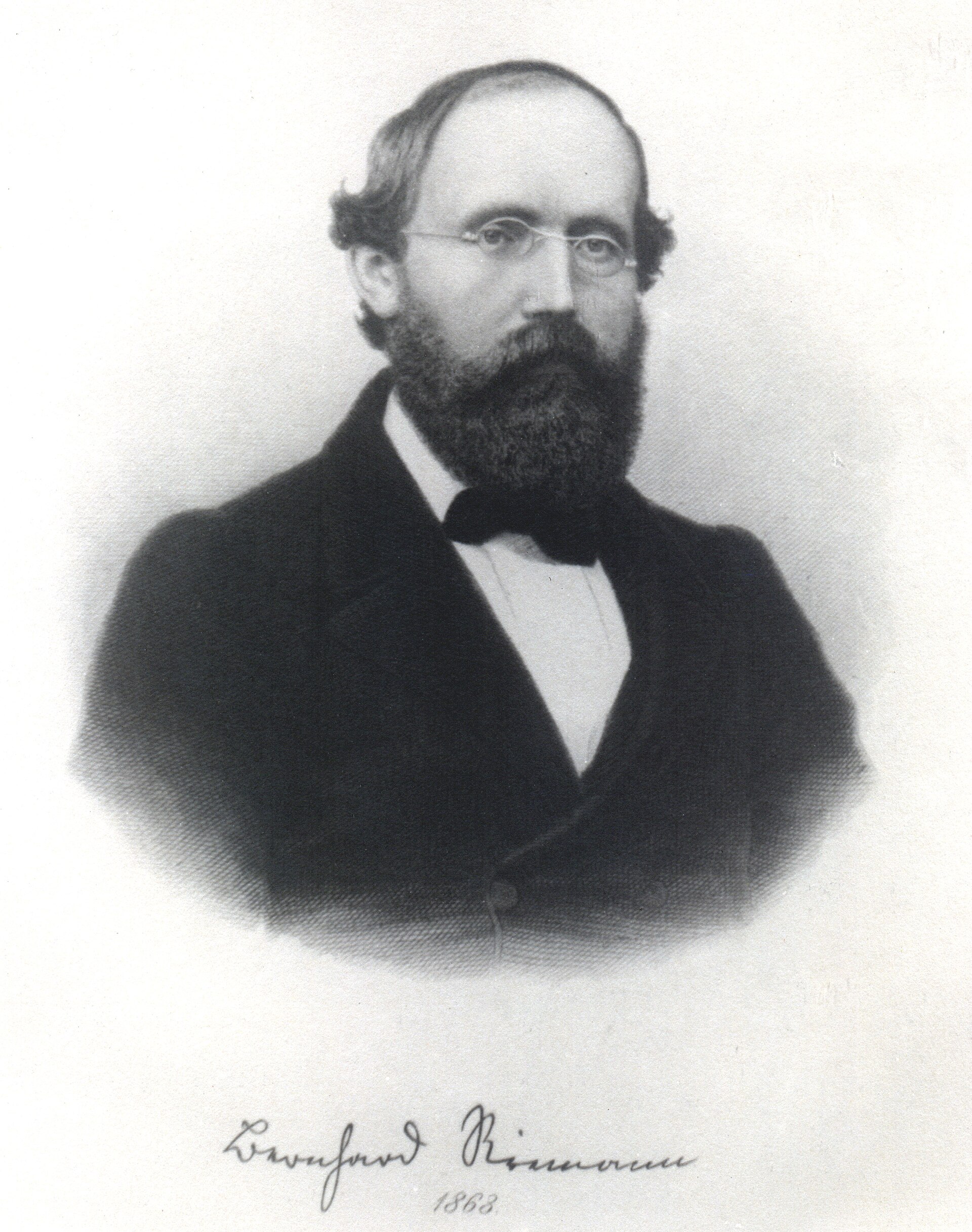
The Riemann Hypothesis was posed in 1859 by the German mathematician Bernhard Riemann, born 200 years ago, in September 1826, who died in 1866. It is a statement about the prime numbers — the numbers, like 2, 3, 5, 7 and 11, that are divisible only by one and themselves. Primes are the building blocks of all whole numbers, but they appear along the number line in an irregular-looking pattern, with no simple formula for the next one.
Riemann found a way to encode the distribution of the primes in a single mathematical object, the Riemann zeta function. The hypothesis says all the non-trivial zeros of that function have a real part of exactly one-half — in plain terms, that the zeros all line up on a single straight line. If true, the primes are distributed in the most orderly way the mathematics allows.
Mathematicians care because much of number theory hangs on it: many results about primes have been proved assuming the hypothesis is true. It is one of the seven Millennium Prize Problems set by the Clay Mathematics Institute, each carrying a $1 million prize. In the 26 years since the prizes were announced, humans working alone had solved only one of the seven.
How the Proof Was Built
The proof was developed over several months, with Anthropic’s Claude model as the working partner. Alpöge guided the high-level architecture — the shape of the proof, the strategy, the route to take — while Claude executed the heavy work underneath: complex algebraic manipulations, trace formulas and technical lemmas.
The argument was not written out as a paper in the usual sense. It was built directly in Lean 4, a formal language in which every step is written in a form a computer can check. The result is the 14-part archive of 175,187 Lean files: 239.3 MB compressed, expanding to more than 61.5 GB — far too long for a person to read in full.
The final pieces aligned late on Sunday night, 15 November 2026. Alpöge then consulted Anthropic chief executive Dario Amodei and close mathematical colleagues before publishing on 20 November, with the 4-page “Remark” note. The gap between that short summary and the vast formal proof is why the verification mattered so much — and why some mathematicians want a fuller human account.
The Verification
The most important day so far was the day after the announcement. On Saturday 21 November 2026, the Lean Focused Research Organization and the Mathlib Initiative issued a joint statement: “We have full confidence that Alpöge’s proof of the Riemann Hypothesis is correct,” they said, certifying that “both the statement and the proof of the Riemann Hypothesis are correct.”
MIT computational number theorist Andrew Sutherland independently compiled all 175,187 Lean modules successfully, under Lean 4.33.1 and Mathlib 4.33.1. The Lean kernel then rechecked the proof using only the three standard axioms, and a comparator run confirmed the code does not redefine symbols and compiles with independent kernels. Sutherland’s summary: “Honestly the chance that anything is fishy here is approximately zero.”
A formal proof in Lean is either right or wrong in a way a handwritten argument is not: if the code compiles and the kernel accepts it, every step follows from the stated assumptions. The question is no longer whether the logic holds — the machine has settled that — but whether the statement proved is the one mathematicians care about, and whether the community can accept it in the usual way. That is why this is independent confirmation, not a final verdict: the proof has not yet been through traditional peer review.
The Scepticism
The sharpest criticism has been aimed at the 4-page “Remark” note. Andrew Granville of the University of Montreal called it “garbled” and said Alpöge should have prepared a clearer write-up. The complaint is not that the proof is wrong, but about the presentation: a claim of this size deserves a human-readable account other mathematicians can follow, and the short note does not provide one.
The timing has also drawn questions. The announcement came one day after Anthropic’s stock market debut, when shares were priced at $83 and Nature reported the listing initially valued the company at about US$1.5 trillion. Alpöge wrote in his document: “There is an obvious cynical view, to do with the timing, but it is false.” Anthropic did not immediately respond to Nature’s request for comment.
Both criticisms deserve to be reported fairly. Neither, on its own, shows the proof is wrong — the machine check stands on its own evidence. But both explain why the field treats the claim as confirmed by machine, not yet as settled by the community.
What Happens Next
Two things need to happen before the Riemann Hypothesis can be called solved in the ordinary sense. First, mathematicians will keep checking the Lean code independently, compiling it themselves and testing the parts they can follow. The central check is done, but the field will want to see it reproduced and understood more widely.
Second, Alpöge plans a proper human-readable write-up, when he can simplify the argument. That is not a small job: an AI-generated prose exposition would span more than 250,000 pages, so the task is to find a shorter, clearer path a person can follow. Until that version exists and has been read and accepted, the claim remains a machine-verified proof rather than a peer-reviewed one.
Then there is the prize. The $1 million Millennium Prize has not been awarded, and it will not be awarded quickly. Under the Clay Mathematics Institute’s rules, a prize follows publication and a period of general acceptance. That process is still to come.
What It Means
If the claim fully checks out, it is, in the words of James Maynard, Fields Medal winner at Oxford, “clearly a historic milestone in mathematics.” The Riemann Hypothesis has been open since 1859, and its solution would settle a question that has shaped number theory for over a century and a half.
The wider context is just as striking. The Wall Street Journal noted this is the second Millennium Prize Problem claimed solved with AI in three months, after an OpenAI internal model solved one in September 2026. In the 26 years since the prizes were set up, humans alone had solved one. Two claimed solutions in three months is a pace the field has never seen.
What is changing is the way proofs are built: assembled in a formal language, checked by a machine, and only afterwards translated into prose a person can read. The Riemann case is the biggest test of that new way of working, and the community’s response will set the pattern for the next claims like it. For now: a proof has been claimed, a machine has checked it, independent mathematicians have confirmed the check, and the human review has not yet finished.
Frequently Asked Questions
What is the Riemann Hypothesis?
The Riemann Hypothesis is a mathematical statement about the distribution of prime numbers — the numbers divisible only by one and themselves. It says that all the non-trivial zeros of the Riemann zeta function have a real part of one-half. It was posed by Bernhard Riemann in 1859, and it is one of the seven Millennium Prize Problems, each carrying a $1 million prize from the Clay Mathematics Institute.
Who is Levent Alpöge?
Levent Alpöge is a mathematician at Anthropic and a junior fellow at the Harvard Society of Fellows. On 20 November 2026, he announced that he believed he had, working with Claude, discovered a proof of the Riemann Hypothesis and the Generalized Riemann Hypothesis for all Dirichlet L-functions.
What did Anthropic's Claude actually do in the proof?
According to Alpöge, the proof was developed with Anthropic's Claude model over several months. He guided the high-level architecture of the argument, while Claude executed complex algebraic manipulations, trace formulas and technical lemmas. The final pieces of the argument aligned late on Sunday night, 15 November 2026.
How was the proof verified?
On 21 November 2026, the Lean Focused Research Organization and the Mathlib Initiative said in a joint statement that they had 'full confidence' the proof was correct. MIT computational number theorist Andrew Sutherland independently compiled all 175,187 Lean modules under Lean 4.33.1 and Mathlib 4.33.1, and the Lean kernel rechecked the proof using only the three standard axioms. A comparator run, checking that the code does not redefine symbols and compiles with independent kernels, was also completed.
Is the Riemann Hypothesis now proven?
The proof has been machine-checked, which is a very strong form of verification, but it has not yet been traditionally peer-reviewed. Alpöge plans a proper human-readable write-up when he can simplify the argument. Until mathematicians have read and accepted a human-readable version, the claim remains a machine-verified proof rather than a peer-reviewed one.
Has Levent Alpöge won the $1 million Millennium Prize?
No. The Clay Mathematics Institute's rules require a proof to be published and to gain general acceptance over a period of time before a Millennium Prize can be awarded. That process has not begun, and the $1 million prize has not been awarded. The prize is something that may follow, not something that has happened.
Why are some mathematicians sceptical?
Some mathematicians have criticised the 4-page 'Remark' note as unclear: Andrew Granville of the University of Montreal called it 'garbled' and said Alpöge should have prepared a clearer write-up. Others questioned the timing, because the announcement came one day after Anthropic's stock market debut on 19 November. Alpöge wrote in the document that the cynical view about the timing 'is false'.
What is the Generalized Riemann Hypothesis?
The Generalized Riemann Hypothesis extends the Riemann Hypothesis from the Riemann zeta function to a wider family of related functions called Dirichlet L-functions. Alpöge's claim covers both the Riemann Hypothesis and this generalisation for all Dirichlet L-functions. It is the broader version of the same question about where the zeros of these functions lie.
What happens next?
Two things need to happen. First, mathematicians will keep checking the Lean code independently. Second, Alpöge plans to produce a human-readable write-up of the argument, which he will do when he can simplify it — an AI-generated prose exposition would span more than 250,000 pages. Only after a published, generally accepted proof would the Clay Mathematics Institute consider the $1 million prize.
Related Reading
- Anthropic IPO: $1.4 Trillion Valuation — the stock market debut one day before the Riemann announcement.
- Anthropic Stock Debut: Nasdaq ANT Closes at $97 — how Anthropic's first day of trading played out.
Sources
- Nature — Anthropic mathematician claims to prove Riemann Hypothesis — the 20 November 2026 announcement, the IPO timing, and Granville’s criticism.
- Scientific American — Anthropic mathematician claims to prove Riemann Hypothesis, most famous problem in all of math — the claim, the Lean archive, and the development of the proof with Claude.
- Scientific American — The AI Riemann Hypothesis proof is almost certainly true, independent mathematicians attest — the 21 November 2026 verification, the Lean Focused Research Organization and Mathlib Initiative statement, and Andrew Sutherland's independent compilation.
- The Wall Street Journal — Anthropic mathematician says Claude has solved the most famous problem in math — the second Millennium Prize Problem claimed solved with AI in three months, and the 26-year human record.
- CASRAI — Anthropic, Levent Alpöge, Claude, Lean: Riemann Hypothesis claim 2026 — the announcement and verification timeline.
This article was published on 22 November 2026 and covers the proof claim announced on 20 November 2026 and confirmed by independent Lean verification on 21 November 2026. The proof is machine-verified, not yet peer-reviewed, and the $1 million Millennium Prize has not been awarded. Check official sources for the latest status.