 MixKhazana
Honda Recalls 810,000 Cars Over Takata Airbags
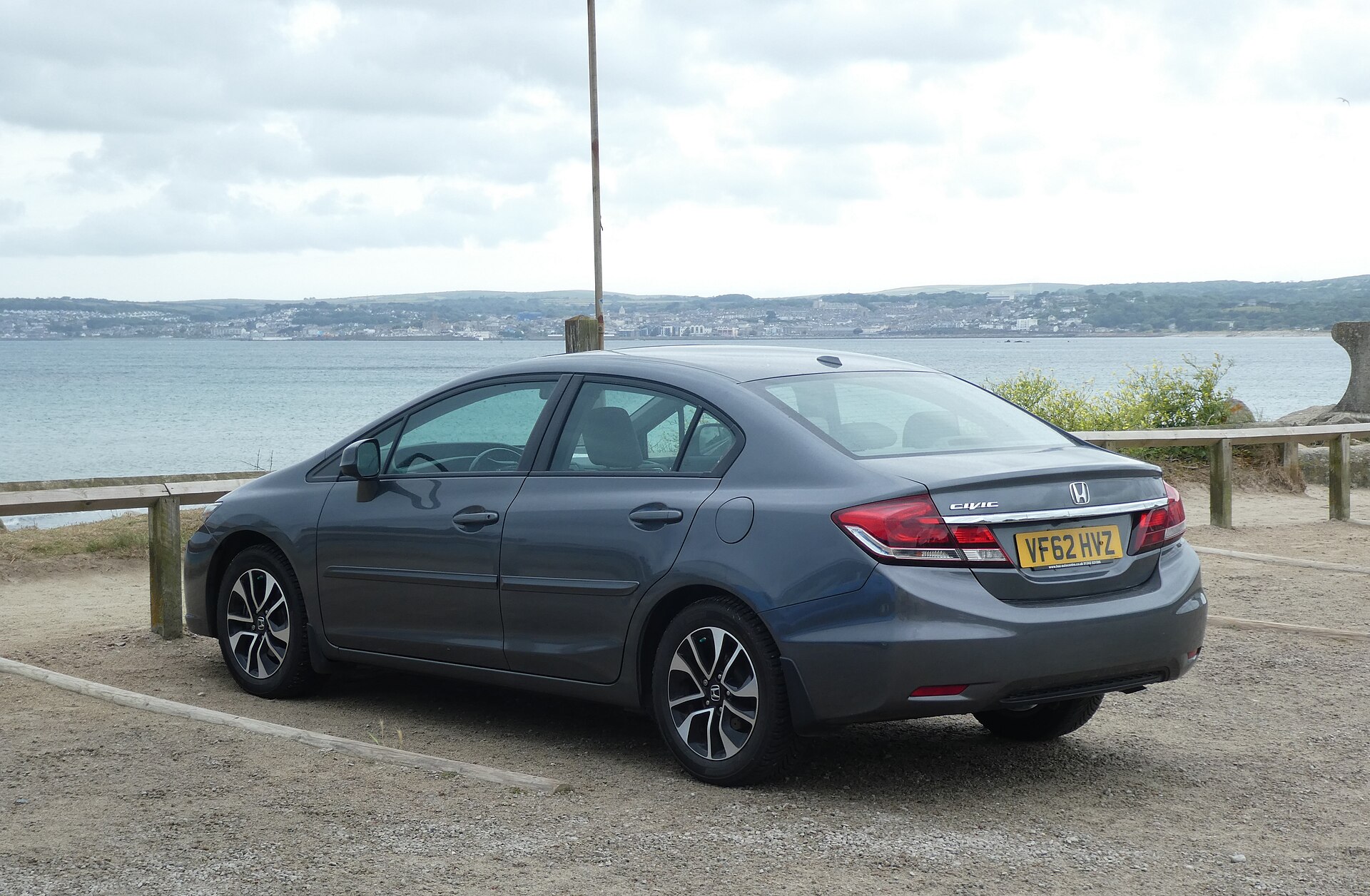
What happened: Honda is recalling 810,592 Honda and Acura vehicles in the United States to replace Takata front driver and passenger airbag inflators that could rupture. The recall, announced on Friday, 20 November 2026, covers the 2013 Honda Accord, 2012–2013 Honda Civic, 2012–2013 Honda CR-V, 2013 Acura ILX and 2013 Acura RDX — but only vehicles originally sold or registered in 14 states and territories known for high heat, humidity and large temperature swings. Dealers will replace the inflators free of charge, and owner notification letters are scheduled to begin going out around 18 December 2026. Toyota announced a recall of 790,000 vehicles for the same issue on the same day, bringing the combined total to about 1.6 million vehicles.
The Takata airbag scandal is not over. More than a decade after the first recalls began, Honda has found yet another group of vehicles with airbag inflators that could fail — and this time the parts involved are a type that earlier recalls had left alone. The result is a new recall of more than 810,000 cars and SUVs in the United States, announced on Friday, 20 November 2026, together with a parallel recall from Toyota that brings the combined total to about 1.6 million vehicles.
The good news is that this recall is preventive. Honda and the National Highway Traffic Safety Administration say there have been no injuries, no crashes and no airbag inflator ruptures tied to the vehicles being recalled. The companies acted on early evidence of a problem found in testing, before anyone was hurt. But the recall is still serious: if one of these inflators were to rupture in a crash, it could send sharp metal fragments into the car. That is why owners of the affected models should check their vehicle identification number now, rather than waiting for the letter in December.
Which Cars Are Affected
The recall covers five model lines, all from the 2012 and 2013 model years. The full list, as published by the National Highway Traffic Safety Administration, is: the 2013 Honda Accord, the 2012–2013 Honda Civic, the 2012–2013 Honda CR-V, the 2013 Acura ILX and the 2013 Acura RDX. In total, 810,592 vehicles are covered in the United States.
But the model and year are not the whole story. This recall applies only to vehicles that were originally sold or ever registered in 14 states and territories known for high temperatures, high humidity and large temperature swings: Alabama, California, Florida, Georgia, Hawaii, Louisiana, Mississippi, South Carolina, Texas, Puerto Rico, the US Virgin Islands, the Northern Mariana Islands (Saipan), Guam and American Samoa.
That geographical limit is the key to understanding the recall. The problem with these inflators is driven by heat and humidity over time, so the risk is concentrated in the hottest and most humid parts of the country. A 2013 Civic that has spent its whole life in Michigan is not covered by this recall, while the same car registered in Florida is. That is why owners should check their own vehicle rather than assuming from the model year alone — the place the car was sold or registered matters as much as the model.
These are popular cars. The Civic and CR-V are among Honda's best-selling models in the United States, and the Accord is one of the best-selling cars in the country. Many of the affected vehicles are now 13 or 14 years old, which means they have often changed hands — and a second or third owner may have no idea the car was ever sold in one of the listed states. Checking the VIN is the only reliable way to know.
What Is Wrong With the Airbags
The problem is in the airbag inflator — the small device that fills the airbag with gas in the fraction of a second after a crash. The affected vehicles are equipped with Takata front driver and/or passenger airbag inflators containing a moisture-absorbing desiccant. Honda's long-term monitoring and analysis found that the propellant inside these inflators may have degraded after prolonged exposure to high absolute humidity and wide temperature fluctuations.
If the propellant degrades, the inflator may rupture when the airbag deploys, instead of inflating it in a controlled way. A rupturing inflator can break apart and send sharp metal fragments through the airbag and into the cabin, where they can seriously injure or kill the driver or passengers. That is the same failure mode that made the original Takata recalls so dangerous — and it is why the NHTSA describes the risk in the starkest terms, warning of serious injury or death.
What makes this recall different from the earlier waves is the type of inflator involved. The long-running Takata recall campaign targeted inflators without a desiccant — the chemical that absorbs moisture. The inflators in this recall do have a desiccant, and for years they were thought to be safe: the desiccant was supposed to protect the propellant from the moisture that causes degradation. Honda's monitoring has now shown that even the desiccated inflators can degrade over time in the hottest and most humid conditions. That finding is what triggered this recall, and it is why the NHTSA says other manufacturers are continuing to test their own inflators.
It is important to be clear about what has and has not happened. According to the NHTSA and the manufacturers, there have been no injuries, crashes or inflator ruptures tied to the vehicles in this recall. The recall is based on analysis and simulation models from independent testing groups, which allowed the companies to act ahead of any real-world failure. That is the system working as it should: testing finds a risk, and the recall happens before anyone is hurt.
Why This Recall Is Happening Now
The recall was announced on Friday, 20 November 2026, in a notice from the NHTSA dated 19 November. The timing reflects how long the analysis takes: Honda's long-term monitoring of inflators in the field, combined with degradation simulation models run by independent testing groups, produced early evidence of a risk in certain vehicles. Once that evidence was clear, the companies moved to a preventive recall.
The NHTSA said late on Friday that "Honda and Toyota saw early evidence of degradation risk in certain of their vehicles and are currently conducting proactive recalls of vehicles," and added that other automakers continue to conduct inflator analysis and testing. That last point is worth noting: the testing that found this problem is still going on at other manufacturers, and further recalls from other brands are possible if their testing finds the same degradation.
The recall is also a reminder of how long the Takata story has been running. Tens of millions of Takata airbags have been recalled across the industry, making it one of the largest product recalls in history. The original recalls began more than a decade ago, and new waves have followed ever since, as testing has found new groups of inflators at risk. Each wave is smaller than the last, but the pattern is the same: a part that was thought to be safe turns out to degrade over time, and the recall follows.
Toyota Is Recalling Cars Too
Honda is not alone. Toyota announced on the same day, Friday, 20 November 2026, that it is recalling 790,000 vehicles worldwide, including 314,000 in the United States, over the same risk that Takata airbag inflators could rupture. Together, the two recalls cover about 1.6 million vehicles.
The Toyota recall covers a wider range of models and years: the 2002–2010 Lexus SC430, the 2011 Lexus IS250, the 2017 Lexus GX460, the 2003–2008 Toyota Corolla, the 2005–2006 Toyota Tundra, the 2005–2007 Toyota Sequoia and the 2016–2017 Toyota 4Runner. Like Honda, Toyota said there were no injuries or crashes tied to the vehicles being recalled, and no airbag inflator ruptures. The company will replace the airbag inflators in the recalled vehicles.
The fact that both companies announced on the same day, for the same reason, shows that this is an industry-wide issue, not a Honda problem alone. Both companies were working from the same kind of evidence — long-term monitoring and independent testing — and both reached the same conclusion at the same time. Owners of older Toyota and Lexus vehicles should check their VINs too, using the same NHTSA tools.
What Owners Should Do
If you own one of the affected models, the first step is to check whether your car is covered. You can do that now, without waiting for the letter: visit recalls.honda.com or recalls.acura.com and enter your vehicle identification number, or check the NHTSA website, where the VINs became searchable from 22 November. You can also call Honda customer service at 1-888-234-2138, or the NHTSA vehicle safety hotline at 1-888-327-4236. Honda's numbers for this recall are BQK, MQJ, KQI and QQH, and the NHTSA campaign number is 26V765.
If your car is covered, the fix is free. Authorised Honda and Acura dealers will replace the affected front driver and/or passenger airbag inflator at no cost to you. You do not need to pay for the part or the labour, and you do not need to wait for the letter to book the repair — you can contact your dealer once you have confirmed your car is affected.
Honda expects to mail interim letters notifying owners of the safety risk around 18 December 2026, and a second letter will follow once the final remedy is available. But there is no reason to wait for the post. The check takes a minute, the repair is free, and the risk — however small — is the kind that should not be left to chance. If you bought your car second-hand, or if it was ever registered in one of the 14 listed states or territories, check it even if you think it does not apply to you.
One more thing: if you are buying a used car from these model years, check the VIN before you buy. A car with an open Takata recall should have the repair done before it changes hands, and a seller who has ignored the recall is a warning sign in itself. The NHTSA website lets anyone check any VIN for free, and it takes less than a minute.
The Takata Story So Far
To understand why a recall announced in 2026 still involves Takata, it helps to know the history. Takata was once one of the world's biggest makers of airbags, supplying car manufacturers around the globe. Its inflators used a propellant based on ammonium nitrate, a chemical that can become unstable when exposed to moisture and temperature changes over time. When the propellant degrades, the inflator can explode with too much force, breaking apart and spraying metal fragments into the car.
The defect led to one of the largest recalls in automotive history, covering tens of millions of vehicles across almost every major manufacturer, and to deaths and injuries around the world. Takata itself went bankrupt in 2017. The recalls have continued ever since, wave after wave, as testing has found new groups of inflators at risk — first the non-desiccated inflators, and now, with this recall, the desiccated ones too.
The lesson of the Takata story is that safety recalls are not a one-time event. A car built in 2013 can still be recalled in 2026, because the risk grows with time and exposure. That is why the system of VIN checks, owner letters and free repairs exists — and why it matters that owners actually use it. The recall only works if the cars come in.
Frequently Asked Questions
Which Honda vehicles are recalled in the 2026 Takata recall?
The recall covers the 2013 Honda Accord, 2012–2013 Honda Civic, 2012–2013 Honda CR-V, 2013 Acura ILX and 2013 Acura RDX — 810,592 vehicles in the United States, but only those originally sold or registered in 14 hot, humid states and territories.
Why are these Honda airbags being recalled?
The Takata front driver and passenger airbag inflators may rupture because the propellant inside degrades after long-term exposure to high absolute humidity and wide temperature swings. A rupturing inflator can send sharp metal fragments at the driver or passengers.
Is my Honda affected by the recall?
Check your VIN at recalls.honda.com or recalls.acura.com, or on the NHTSA website, or call Honda customer service at 1-888-234-2138. Only vehicles originally sold or ever registered in the 14 listed states and territories are covered.
What is the fix for the recalled Honda airbags?
Authorised Honda and Acura dealers will replace the affected front driver and/or passenger airbag inflator free of charge. There is no cost to the owner.
When will Honda notify owners about the recall?
Honda expects to mail interim letters notifying owners of the safety risk around 18 December 2026. A second letter will follow once the final remedy is available.
Has anyone been hurt by these airbags?
No. Honda and the NHTSA say there have been no injuries, crashes or airbag inflator ruptures tied to the vehicles in this recall. The recall is preventive, based on testing that showed early evidence of degradation.
Is Toyota also recalling cars for Takata airbags?
Yes. Toyota announced on the same day, 20 November 2026, a recall of 790,000 vehicles worldwide, including 314,000 in the United States, for the same Takata inflator issue. Together the two recalls cover about 1.6 million vehicles.
What are Honda's recall numbers for this campaign?
Honda's numbers for this recall are BQK, MQJ, KQI and QQH, and the NHTSA campaign number is 26V765. Owners can also contact the NHTSA vehicle safety hotline at 1-888-327-4236.
Related Reading
- New Honda Avancier Hybrid SUV 2026 — Honda's newest SUV, revealed on 20 November 2026 — the same day the recall was announced.
- New Hyundai Elantra 2027: LA Auto Show — the other big car launch of the week, from the Los Angeles Auto Show.
Sources
- Reuters via Duke FM — Honda to recall 810,000 US vehicles over Takata air bag rupture risk — the announcement of 20 November 2026, the models covered and the 14 states and territories.
- Reuters via LA Post — Honda, Toyota recall 1.6 million vehicles over Takata airbag rupture risk — the Toyota recall, the NHTSA statement, and the no-injuries confirmation.
- Autoblog — Honda's Takata Airbag Nightmare Isn't Over: 810,000 More Vehicles Recalled — the desiccated inflator detail, the December notification letters and the VIN check links.
- NewsNation via Louisiana First News — 800,000 Hondas recalled for potentially deadly air bag inflators — the NHTSA campaign number 26V765 and Honda's recall numbers.
This article was published on 24 November 2026 and covers the recall announced on 20 November 2026. Check your VIN at recalls.honda.com or on the NHTSA website — the information here is general guidance, not a substitute for the official recall notice.