 MixKhazana
COP31 Climate Talks Fail in Antalya Over Fossil Fuels
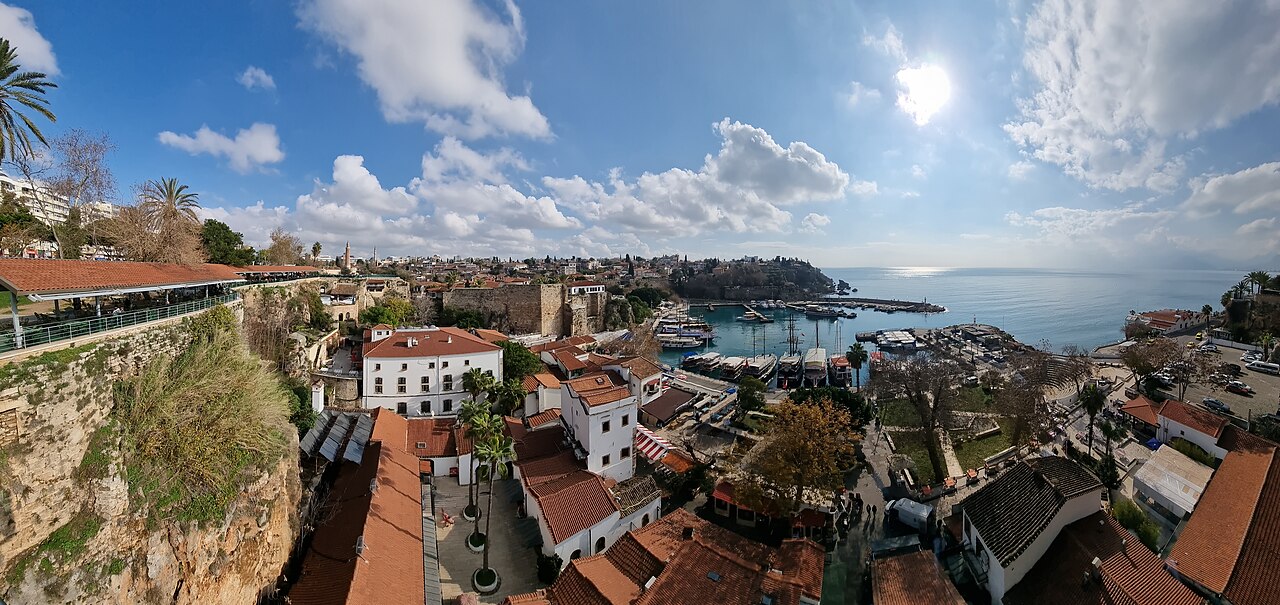
What happened: COP31, the United Nations climate summit in Antalya, Turkey, ended on Sunday 22 November 2026 without an overarching climate agreement. Nearly 200 countries failed to reach consensus after talks ran 44 hours into overtime, making COP31 the longest UN climate conference ever. The European Union, the United Kingdom, Panama and other countries rejected the proposed cover decision, known as the Antalya Pact, because it did not explicitly mention fossil fuels. COP31 President Murat Kurum conceded that the deal had failed to reach consensus and it was not adopted.
The climate talks in Antalya are over, and they ended without a deal. COP31, the United Nations climate summit held in the Turkish Mediterranean city of Antalya, closed on Sunday 22 November 2026 with no overarching climate agreement, after nearly 200 countries spent two extra days trying — and failing — to agree on a final text. It was, by length alone, the longest UN climate conference ever held.
The failure was not quiet. In the final hours, the European Union walked away from the proposed cover decision, known as the Antalya Pact, because the text did not mention fossil fuels at all. Saudi Arabia and other oil-producing countries had opposed stronger language on fossil fuels. Because the COP process works by consensus — nearly 200 countries must all agree on a final text — the disagreement was enough to sink the deal. COP31 President Murat Kurum, Turkey's environment minister, conceded that the deal had failed to reach consensus, and it was not adopted.
What Happened in Antalya
COP31 was the 31st United Nations climate summit, held in Antalya, a resort city on Turkey's Mediterranean coast. Delegations from nearly 200 countries gathered there to negotiate a shared climate agreement — the kind of overarching deal each year's COP is meant to produce, covering emissions cuts, adaptation to a warming climate, and paying for both.
By the time the summit was due to finish on Friday, there was still no agreement. Negotiators kept going through the weekend, testing new wording in an effort to find a text every country could accept. In the end they could not. On Sunday 22 November 2026, COP31 ended without an overarching climate agreement.
The point on which the talks broke down was the proposed cover decision, the main outcome document of the summit, known as the Antalya Pact. A cover decision records what the conference as a whole has decided — and if it is not adopted, the summit has no headline outcome. The Antalya Pact was put to the countries present, it was rejected, and the conference closed without it. The rejection was led by the European Union, together with the United Kingdom, Panama and other countries, whose objection was specific: the text did not explicitly mention fossil fuels. EU Commissioner for Climate Wopke Hoekstra said the EU could not endorse a deal that does not mention fossil fuels, the key driver of climate change. Ireland's climate minister, Darragh O'Brien, spoke for the EU in the closing session and left the room together with Hoekstra.
It is worth being clear about what "no deal" means. It does not mean nothing at all happened in Antalya. AP reported that the meeting made progress on smaller issues despite the cover decision failing. But the summit's central purpose — an overarching climate agreement that all countries could sign — was not achieved, and that is why COP31 is being described as a failure.
Why Fossil Fuels Broke the Deal
The disagreement was not about whether climate change is happening, or about the science. It was about words in a document — and about what those words would commit countries to. The countries that rejected the Antalya Pact wanted the final text to mention fossil fuels explicitly. Their argument, as put by the EU's climate commissioner, was straightforward: fossil fuels are the key driver of climate change, so a climate agreement that does not mention them is missing the central issue. With the world heading for an overshoot of 1.5°C, Hoekstra said the EU could not endorse a deal that leaves fossil fuels out.
Behind that position sits a recent piece of climate history. At COP28 in Dubai, countries agreed to transition away from oil, gas and coal. A coalition of more than 130 countries at COP31 pushed to reaffirm that COP28 agreement — to restate, in the Antalya text, the commitment to move away from fossil fuels. But the final draft did not do that. It only recalled the Dubai agreement, without naming fossil fuels. For the coalition, that was not enough, and for the EU and its allies it was a reason to refuse the text altogether.
On the other side, Saudi Arabia and other oil-producing countries opposed stronger fossil-fuel language. For countries whose economies depend heavily on oil and gas production, language that names fossil fuels and commits the world to moving away from them carries direct economic consequences. Neither side gave way, and the structure of the COP made that fatal to the deal: because the process works by consensus, a text that some countries reject cannot be adopted. The EU and its allies would not accept a text without fossil-fuel language; Saudi Arabia and other oil-producing countries would not accept a text with stronger language. With no wording acceptable to both, there was no text at all. The summit did not collapse over a technical detail. It collapsed over the central question in climate politics: whether the world's climate agreement will name the fuels that cause most of the warming.
The 44-Hour Overtime
COP31 was scheduled to finish on Friday. It did not. The talks ran two days past their scheduled finish, 44 hours into overtime, making COP31 the longest UN climate conference ever held.
Two days of overtime is far beyond the usual overrun. Overtime at a COP is not unusual — talks often run past their scheduled close while negotiators work through the night on a final text. But 44 hours means that after the Friday deadline passed, delegations stayed in Antalya through the weekend, still trying to find wording that could bridge the divide over fossil fuels. Negotiators do not stay for two extra days if there is nothing left to discuss; they stay because a deal still looks possible, or because the cost of leaving without one is high enough to justify the effort. For 44 hours, the delegations kept working, kept testing new wording, and kept hoping a compromise would emerge. In the end, it did not.
The closing scene captures the mood of those final hours. In the closing session, Ireland's climate minister Darragh O'Brien spoke for the EU — and then left the room with EU Commissioner for Climate Wopke Hoekstra. It was a public, visible walkout: the EU's representatives stating their position and then leaving, rather than staying to endorse a text they had rejected. Shortly afterwards, COP31 President Murat Kurum conceded that the deal had failed to reach consensus and was not adopted. The record length of COP31 is now part of the story itself — a measure of how hard the negotiators tried, and of how deep the disagreement was. Two extra days of talks could not produce a text that nearly 200 countries could all accept, because the gap between the two sides was not one that more time could close.
What Was Agreed and What Was Not
The headline is that no overarching climate agreement was reached. But it is worth setting out clearly what was agreed, what was proposed and then lost, and what the final numbers were. First, what was not agreed: the Antalya Pact, the proposed cover decision, was not adopted. COP31 President Murat Kurum conceded that it had failed to reach consensus.
Second, what did not ultimately pass. The 35-by-35 electrification pledge — a proposal to raise electricity's share of global final energy use to 35% by 2035 — was signed by dozens of countries, but it did not ultimately pass. It had support, in that dozens of countries put their names to it, but support from dozens of countries is not the same as adoption by the conference, and the pledge did not make it through.
Third, the money. An earlier draft proposed at least US$120 billion a year in adaptation finance by 2035 — money to help countries adapt to the effects of climate change that are already happening. That figure was dropped from the text before the end. In the end, only $142 million in additional funding was pledged. The gap between the figure proposed and the funding actually pledged is one of the starkest numbers to come out of Antalya: a draft proposal of at least $120 billion a year, against $142 million pledged in total.
Fourth, what was agreed. The meeting did make progress on smaller issues, according to AP reporting, even though the cover decision failed. But progress on smaller issues does not change the overall result: the summit's main outcome was not reached, and the two flagship items in play — the 35-by-35 pledge and the adaptation finance figure — were both lost. The picture is of a summit that produced movement on the margins and failure at the centre.
The 1.5°C Problem
Behind the argument in Antalya sits a number that frames the whole climate effort: 1.5°C. That is the goal set by the Paris Agreement — to keep the rise in global temperatures well below 2°C above pre-industrial levels, and to pursue efforts to limit it to 1.5°C. The COP31 talks took place against the background of that goal slipping away.
The latest temperature figures make the scale of the problem plain. October 2026 was 1.8°C warmer than the mid-1800s, according to Berkeley Earth — 1.8 degrees above the temperatures of the mid-nineteenth century, the period used as a baseline for measuring warming since the industrial era began. A single month's figure is not the same as the long-term average the Paris goal is measured against, but it shows how far temperatures have already risen. And the planet is sure to breach the Paris Agreement's 1.5°C goal — the question is no longer whether the goal will be breached, but by how much and for how long.
That is the context in which the EU's objection was made. When Hoekstra said the EU could not endorse a deal that does not mention fossil fuels, he linked the omission directly to the temperature goal: with the world heading for an overshoot of 1.5°C, a deal that stays silent on the key driver of climate change was not one the EU could sign. The 130-plus countries that pushed to reaffirm the COP28 agreement to transition away from oil, gas and coal were making the same connection. The Dubai agreement was the first time a COP text had committed countries to moving away from fossil fuels, and reaffirming it in Antalya would have kept that commitment at the centre of the world's climate effort. Instead, the final draft only recalled the Dubai agreement without naming fossil fuels. The 1.5°C problem also explains why the failure matters beyond the conference hall: every year that passes without an agreement that names fossil fuels is a year in which the transition away from them is not being driven by a shared global commitment.
What Happens Next (Addis Ababa 2027)
The climate talks do not stop because one summit failed. The COP process moves on to its next meeting, and the work left unfinished in Antalya will be waiting there. Next year's summit is scheduled in Addis Ababa, Ethiopia, in November 2027. That is where the delegations will gather again, a year after Antalya, to try once more to agree on the text that COP31 could not produce. The host city changes — from a Mediterranean resort in Turkey to the capital of Ethiopia — but the question that broke COP31 will travel with the talks: whether the final text will name fossil fuels, and whether nearly 200 countries can agree on wording that satisfies both the countries pushing for stronger language and the oil-producing countries that opposed it.
The failure in Antalya also leaves unresolved items for Addis Ababa to pick up. The 35-by-35 electrification pledge, signed by dozens of countries but not ultimately passed, is one of them. The adaptation finance figure — at least US$120 billion a year by 2035, proposed in an earlier draft and then dropped — is another. And the central question, the reaffirmation of the COP28 agreement to transition away from oil, gas and coal, remains open. The coalition of more than 130 countries that pushed for that reaffirmation in Antalya will have the chance to push for it again.
There is also the question of what the failure does to the COP process itself. The consensus rule — that nearly 200 countries must agree a final text — is what allowed a disagreement over fossil fuels to sink the whole summit. That rule gives every country a voice in the outcome, but Antalya showed its cost: when two blocs hold opposite positions on the central issue, consensus becomes impossible, and the summit can end, after 44 hours of overtime, with no deal. Whether that leads to changes in how the talks are run, or simply to another attempt at the same process in Addis Ababa, will become clear in the year ahead. For now, the facts of COP31 are these: the summit ended on Sunday 22 November 2026 without an overarching climate agreement; the EU, the UK, Panama and other countries rejected the Antalya Pact because it did not mention fossil fuels; Saudi Arabia and other oil-producing countries opposed stronger language; the 35-by-35 pledge did not pass; the $120 billion adaptation finance figure was dropped; only $142 million in additional funding was pledged; October 2026 was 1.8°C warmer than the mid-1800s; and the next summit is in Addis Ababa in November 2027.
Frequently Asked Questions
What is COP31?
COP31 is the 31st United Nations climate summit. It was held in Antalya, Turkey, and brought together nearly 200 countries to negotiate a shared climate agreement. It ended on Sunday 22 November 2026 without an overarching climate deal.
Why did COP31 fail?
COP31 failed because the nearly 200 countries could not agree on a final text. The proposed cover decision, known as the Antalya Pact, did not explicitly mention fossil fuels, and the European Union, the United Kingdom, Panama and other countries refused to endorse it. Saudi Arabia and other oil-producing countries opposed stronger fossil-fuel language, and the COP process requires consensus, so the deal was not adopted.
What was the Antalya Pact?
The Antalya Pact was the proposed cover decision at COP31 — the main outcome document that the summit was meant to adopt. It was rejected because it did not explicitly mention fossil fuels. COP31 President Murat Kurum conceded that the deal had failed to reach consensus and it was not adopted.
Why did the EU reject the COP31 deal?
The EU rejected the proposed text because it did not mention fossil fuels. EU Commissioner for Climate Wopke Hoekstra said the EU could not endorse a deal that does not mention fossil fuels, the key driver of climate change, with the world heading for an overshoot of 1.5°C. Ireland's climate minister Darragh O'Brien spoke for the EU and left the room with Hoekstra.
Which countries opposed stronger fossil-fuel language at COP31?
Saudi Arabia and other oil-producing countries opposed stronger fossil-fuel language at COP31. A coalition of more than 130 countries had pushed to reaffirm the COP28 agreement to transition away from oil, gas and coal, but the final draft only recalled the Dubai agreement without naming fossil fuels.
How long did COP31 run?
COP31 ran two days past its scheduled Friday finish, 44 hours into overtime, making it the longest UN climate conference ever. It ended on Sunday 22 November 2026.
What was agreed at COP31?
No overarching climate agreement was reached, but the meeting made progress on smaller issues, according to AP reporting. The 35-by-35 electrification pledge was signed by dozens of countries but did not ultimately pass, an earlier draft proposal of at least US$120 billion a year in adaptation finance by 2035 was dropped, and only $142 million in additional funding was pledged.
Where is the next climate summit?
The next climate summit is scheduled in Addis Ababa, Ethiopia, in November 2027.
Related Reading
- South Florida Floods: Up to 15 Inches of Rain — another major weather story from this month — up to 15 inches of rain flooded South Florida.
Sources
- NPR Illinois — Climate change talks fall apart in final hours over fossil fuels — reporting on the COP31 talks falling apart in the final hours over fossil fuels.
- Phys.org — COP31 climate talks — reporting on the COP31 climate talks in Antalya.
- Global Issues — COP31 coverage, 22 November 2026 — reporting on the COP31 outcome on 22 November 2026.
This article was published on 23 November 2026 and reports the COP31 outcome of 22 November 2026 in Antalya, Turkey. Temperature figures are Berkeley Earth figures as reported. This article is general information, not professional advice.